It can be pretty daunting trying to decide on which second hand piano to buy. With so much choice, how do you know if you’re making a good investment?
At Piano Auctions we strive to make the process of buying a piano as painless and as hassle free as possible. With a catalogue with over 100 different pianos from upright to grand, you can rest assured that we only sell the best second hand pianos.
To help you on your search we’ve put together a short guide of things to look out for when buying a secondhand piano.
Signs a Secondhand Piano Isn’t in Good Condition
When looking at a Pianos condition, you want to make sure that there are no obvious signs of damage on first inspection.
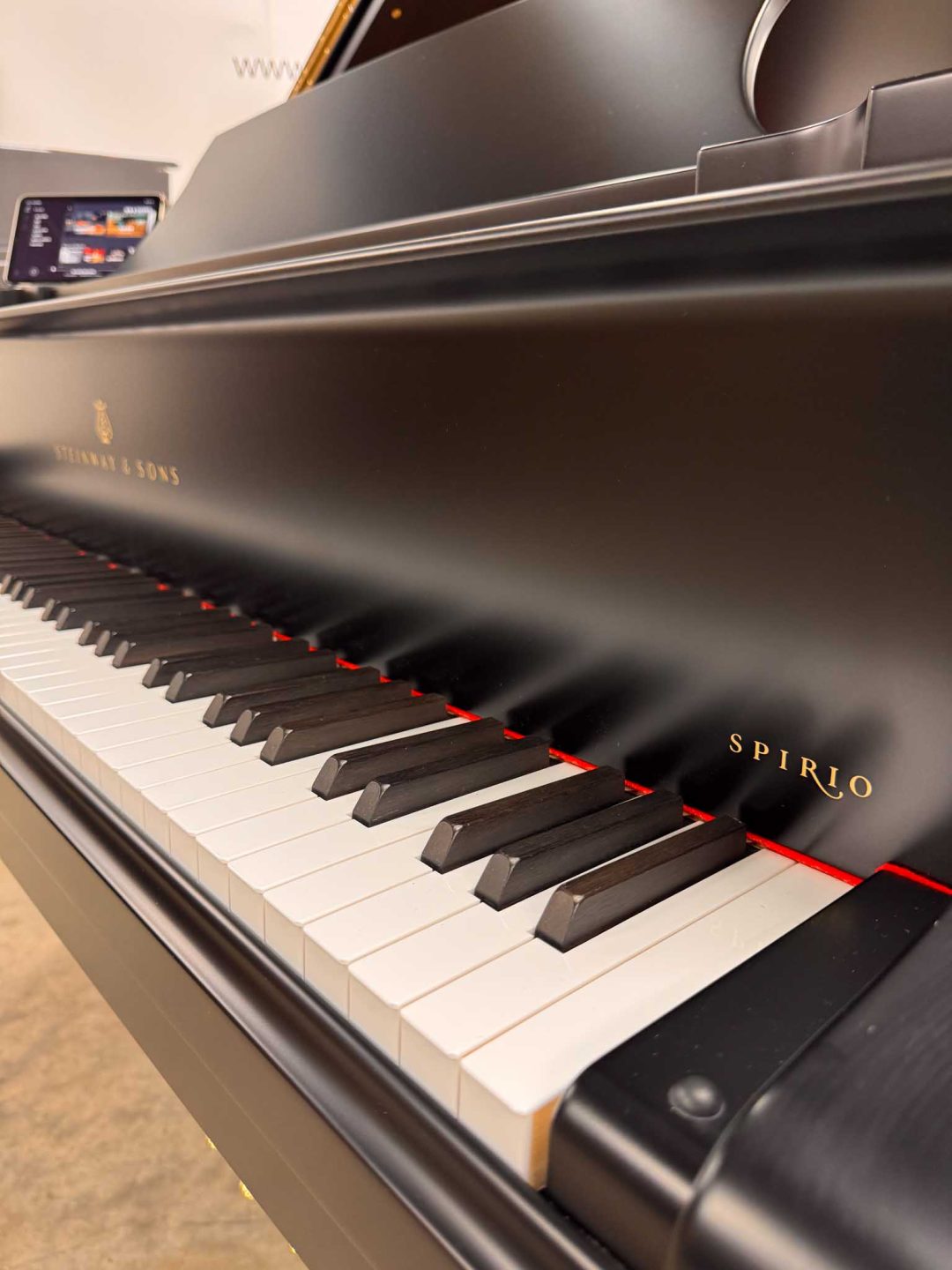
1. Sticky or Damaged Keys
Make sure the keys of your piano keyboard don’t stick and are not broken, missing or chipped. Dirty keys may also indicate that the keys have not been cleaned properly after use. Oils from fingers can discolour ivory.
If too much water has been used in the cleaning process, the moisture can warp the keys and prevent them from operating properly.
Play Every Key – Listen for consistent tone and volume- if some notes sound more out of tune than others it can indicate a blocked pin which can be expensive to rectify.
Key Response – Notes should respond evenly without sticking or sluggishness.
2. Irregular Noises and Sound Quality
Another sign of damage in a piano is if you can hear rattling or buzzing noises. The sound may also be muffled.
A rattling sound in the secondhand piano is often an indication of loose or broken parts inside your instrument. Loose parts can be caused by the constant vibrations emitted from play. Tighten up the screws, pins and hinges and test the instrument again to see if the rattling has stopped.
You may also be able to hear buzzing sounds. A buzzing sound when you play may also indicate a loose component within the piano like a screw, string or part of the action. It may also be caused by parts vibrating against each other, which usually happens with worn-out parts, dust accumulations or it could mean the piano simply needs tuning.
Muffled noises coming from the piano when you play could have a variety of different causes:
- Misaligned action
- Worn out felt on the hammers
- Damp or old soundboard
- Hammers that are too dense or light
If your piano sounds muffled, replacing or fixing these parts can help to get a clearer and sharper sound.
3. Humidity Issues
Humidity can also cause a number of problems for your piano.
High Humidity causes moisture that causes felts to swell and strings to corrode which can affect the Piano’s tone.
Damp and musty conditions can mean that the action mechanism becomes sluggish.
In low humidity, the bridge can become separated from the soundboard, and the pins -can become unstable, creating a jarring sound which makes it harder to tune the piano properly.
The relative humidity for a piano should be somewhere between 40% and 60%. Too low a humidity, and the piano will start to dry out and parts can become brittle. Too high a humidity and the piano will become damp, which can affect tune, cause swelling or mean that glued and felted components can begin to come apart.
Rapid changes in humidity can also cause problems, so when you’re viewing the piano, find out as much as you can about how it’s been stored and what conditions were like in its previous home.
4. Out of Tune Pianos
As well as humidity, the wrest plant (otherwise known as the pin block) plays an important part in tuning, as it keeps the strings at the right tension for the clearest and most resonant notes. If this component becomes damaged, the pins that grip the wood and keep the strings tight will not be able to hold properly, which could cause the piano to sound out of tune.
You can test if a piano is out of tune when you play it. Sometimes it may be a simple fix, but a piano technician will be able to advise you.
5. Broken Pedals on a Piano
A broken sustain pedal on a secondhand piano can cause the notes you play to cut off abruptly when you release the pressure on the keys, creating a choppy and stilted sound. Sustain pedals keep the notes sounding out, allowing you to connect chords and notes smoothly. It works by moving the dampers away from the strings so that they can continue to vibrate. You can find the sustain pedal on the right of the piano.
If the sustain pedal is broken, it will either be stuck and the notes will play on too long or it will be non-responsive and you will get staccato issues.
Sostenuto Pedal
This middle pedal holds down the notes that are already being played for a more selective sustaining of chords and keys, allowing for continued resonance as you play other notes.
Older pianos do not have this middle pedal. If there is a third, it may be the brass sustain which only sustains lower notes or the celeste pedal (the practice pedal) that softens notes. A celeste pedal can be locked down for quieter practice.
If the sostenuto pedal breaks, you won’t be able to create layered music, damaging the richness and depth of the musical piece you are performing.
The Soft Pedal known as the una corda pedal, this pedal found on the left has a similar purpose to the celeste pedal, softening the sound of the piano for a more muted musical quality.
The soft pedal controls how many strings are struck by the hammer when a note is played. In older pianos, there are two strings for every note, while modern grand pianos have a grouping of three. The soft pedal shifts the hammer so instead of striking all three strings, it strikes only one, hence the use of the phrase ‘una corda’ or ‘one string’.
In upright pianos, the soft pedal operates the hammers a little differently. The pedal will shift the hammer closer to the strings, giving them less distance to build up speed and subsequent impact and softening the sound.
If the soft pedal is broken, you won’t be able to control the hammer shifts, meaning your performance loses nuance and will remain at the same volume, limiting tonal variations.
Questions to Ask When Viewing a Secondhand Piano
- How old is the piano? – you can find this out by inspecting the piano serial number as well.
- When was it last tuned?
- Have there been repairs or replacements carried out for the piano? Is there a record?
- Where has the piano been stored?
- Does the piano come with a warranty?
- How has the sound quality held?
- What is the playing condition of the piano?
A step by step guide to checking the State of a Secondhand Piano
At your viewing appointment, you will have the opportunity to test play the piano to ensure that everything is in working order.
1. Check all the keys work
2. Check all the strings sound properly
3. Check the pedals work
4. Check the hammer density and alignment
5. Check the soundboard for cracks and unexpected weight
6. Check the bridge to ensure all the pins are working properly
7. Check the dampers
8. Check the springs and ensure the hammer returns quickly for rapid and responsive
playability
When buying a second hand piano at Piano auctions we ensure the pianos we sell are in the best possible condition. We will keep all documents on repairs or replacements carried out by either us or the previous owner.
If there have been any issues overlooked, our professional piano technicians will be more than happy to fix the issue.
You can review the pianos in our collection in our auction catalogue, with a range of brands and models suitable for players of all experience levels. Once you’ve found a second hand piano you like, book your viewing appointment and become one step closer to buying your dream secondhand piano.