1853
Born in Berlin.
Carl Bechstein founded his workshop in Berlin with the ambition of building a piano robust enough for the new generation of virtuoso performers, yet refined enough for the concert hall. His timing was perfect: the romantic repertoire demanded instruments of a power and subtlety that older pianos could not provide.
1857
Liszt’s sonata.
Hans von Bülow gave the first public performance of Liszt’s monumental Sonata in B minor on a Bechstein. The endorsement of Liszt and his circle, and later of Wagner, established Bechstein as the leading German piano of the romantic age.
1885
London calling.
Bechstein opened a London branch and went on to build Bechstein Hall on Wigmore Street in 1901. Renamed Wigmore Hall after the First World War, it remains one of the world’s great recital venues to this day.
1900
Royal warrants.
By the turn of the century Bechstein was producing some 5,000 pianos a year and held royal warrants from courts across Europe, including those of Britain, Spain, Russia and Italy. It was, briefly, the largest premium piano maker in the world.
1945
Rebuilding.
The Berlin factory was destroyed during the Second World War. In the decades that followed, Bechstein rebuilt and refocused on the hand-built concert and academy instruments for which it had become renowned.
Today
Hand-built in Germany.
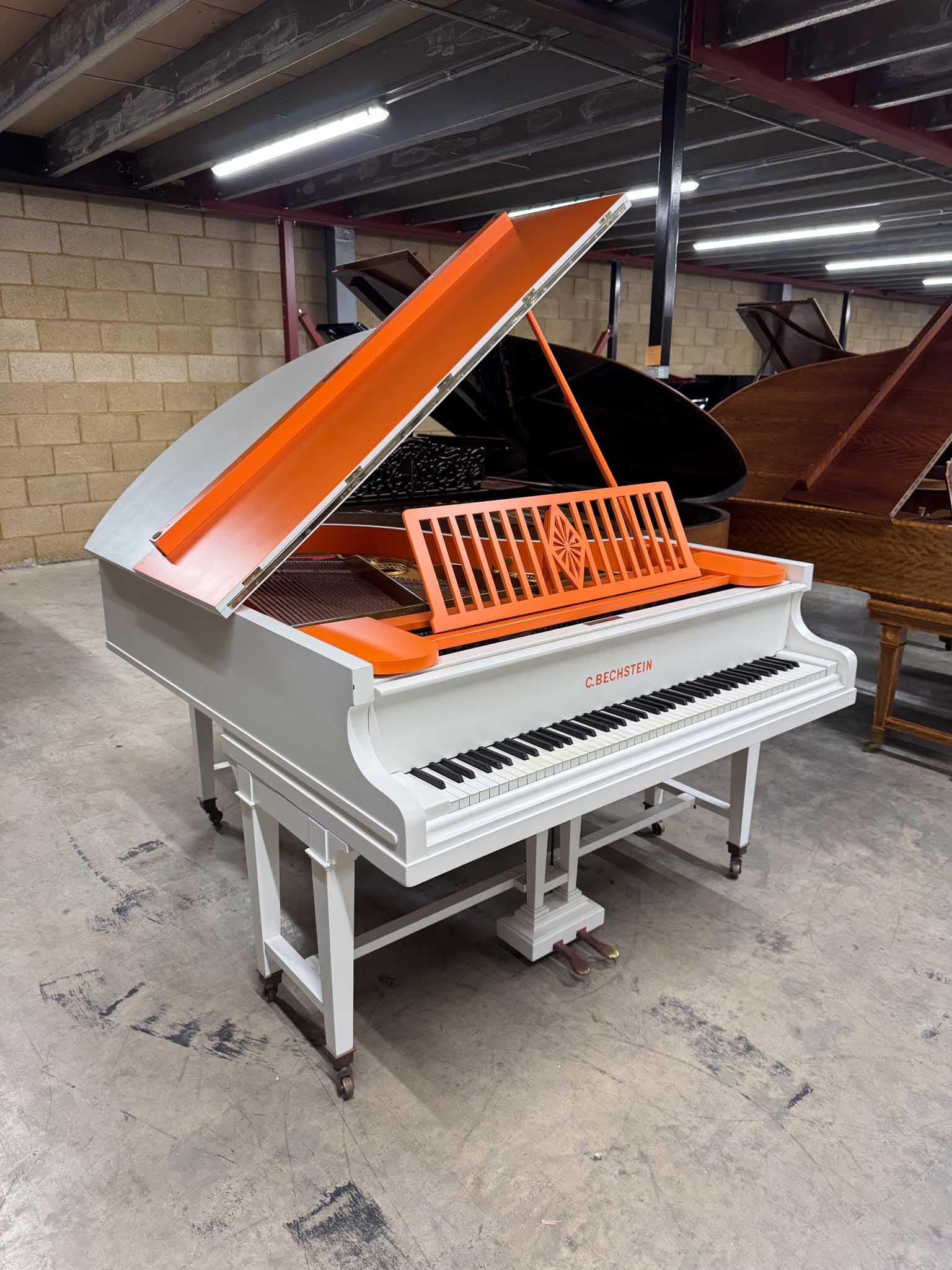
Every C. Bechstein concert grand is still hand-built in Germany. The Concert and Academy lines remain pre-eminent instruments for the serious recital hall and the discerning private collector.